
 English
 Русский
 Español
 Français
 Deutsch
 简体中文
 Árabe
 Português
 日本語
 한국어
 हिंदी
 Prancis
 Türkçe
 Tiếng Việt
 Italiano
 ไทย

How to Choose the Right Industrial Incinerator for Waste Treatment
Industrial waste can vary greatly in composition, moisture content, calorific value, particle size, and ash content. These differences directly affect the way waste should be treated. Choosing suitable Industrial Incinerators therefore requires more than comparing equipment size or purchase price.
An appropriate incinerator should match the waste characteristics, required processing capacity, combustion conditions, installation space, and maintenance requirements. The following guide explains the main factors buyers should consider when selecting an industrial waste incinerator.
Why Industrial Incinerators Are Used for Waste Treatment
Industrial incineration uses controlled high-temperature combustion to treat combustible waste. It can reduce the volume of solid waste and convert combustible components into gases and ash.
Industrial Incinerators are used in various industries where conventional waste disposal methods may not meet operational requirements. The equipment can be designed for different waste characteristics and processing capacities.
The actual configuration depends on the type of waste, required throughput, combustion conditions, and local environmental requirements.
What Types of Waste Can an Industrial Incinerator Handle?
An industrial incinerator can be designed for different waste categories. Common applications include industrial production waste, hazardous waste, medical waste, animal waste, and other combustible materials.
Waste characteristics should be analyzed before equipment selection.
Important factors include:
Moisture content
Calorific value
Waste composition
Particle size
Ash content
Feeding condition
Hazardous components
High-moisture waste may require additional heat to maintain stable combustion. Waste with a high calorific value may require different combustion control compared with low-calorific waste.
Therefore, the waste analysis should come before the equipment specification.
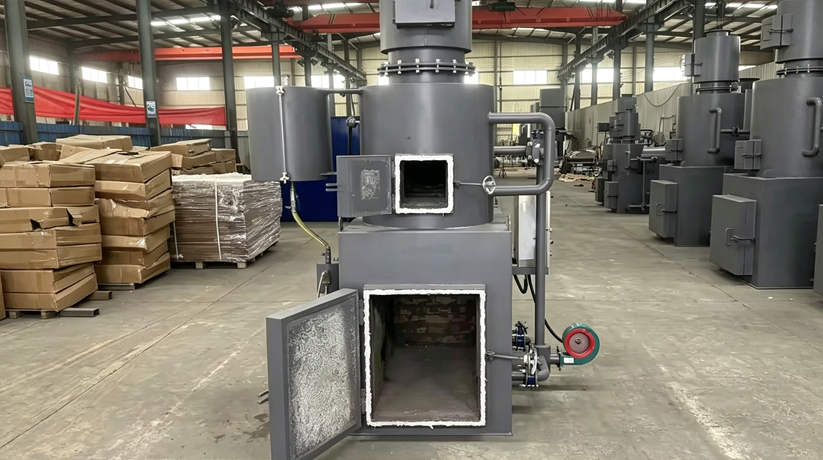
How an Industrial Waste Incinerator Works
An industrial waste incinerator generally includes a feeding area, combustion chamber, burner or auxiliary heating equipment, ash discharge arrangement, and exhaust treatment components.
Waste enters the combustion chamber through a suitable feeding method. The combustion process then provides controlled heat and sufficient residence time for the combustible components to burn.
The exact process depends on the incinerator design and waste type.
Some applications require primary and secondary combustion stages. The secondary stage can provide additional combustion of gases generated during the initial waste treatment process.
Key Factors to Consider Before Buying an Industrial Incinerator
Several technical factors should be evaluated before purchasing Industrial Incinerators.
First, buyers should determine the type and quantity of waste. Daily or hourly waste production affects the required capacity.
Second, the operating temperature and required residence time should be considered. Different wastes require different combustion conditions.
Third, the installation environment matters. Available space, power supply, fuel availability, waste feeding, ash removal, and maintenance access can all influence the equipment configuration.
Local emission requirements should also be reviewed during project planning.
Industrial Incinerator for Sale: What Should Buyers Check?
When searching for an industrial incinerator for sale, buyers should avoid comparing equipment only by price.
A lower initial price may not represent lower long-term operating costs if the equipment does not match the waste characteristics or required capacity.
Buyers should compare:
| Factor | What to Check |
| Waste type | Composition and physical characteristics |
| Capacity | Required processing volume |
| Combustion temperature | Suitable operating range |
| Residence time | Required treatment conditions |
| Fuel consumption | Auxiliary fuel requirements |
| Feeding method | Compatibility with waste form |
| Ash discharge | Handling and removal method |
| Maintenance | Access to major components |
| Emission control | Applicable local requirements |
| Customization | Ability to match project conditions |
A clear technical specification is important when comparing different suppliers.
How Incinerator Capacity Affects Equipment Selection
Capacity should match the actual waste generation rate.
An undersized incinerator may require excessive operating time and may not provide sufficient treatment capacity. An oversized unit can increase equipment investment and may operate below its intended loading conditions.
Buyers should consider both average and peak waste volumes. Waste generation can change between production periods, so the expected operating pattern should be included in the calculation.
For project planning, capacity should be determined together with waste type, feeding method, operating hours, and required combustion conditions.
Combustion Temperature and Residence Time
Combustion temperature and residence time are two important factors in incinerator selection.
Temperature affects the combustion process and the treatment of different waste components. Residence time determines how long gases and waste remain under the required combustion conditions.
These factors should not be considered separately. Waste composition, moisture content, calorific value, chamber design, and airflow all affect combustion performance.
The selected Industrial Incinerators should therefore be designed around the actual waste characteristics rather than using one temperature or residence-time value for every application.
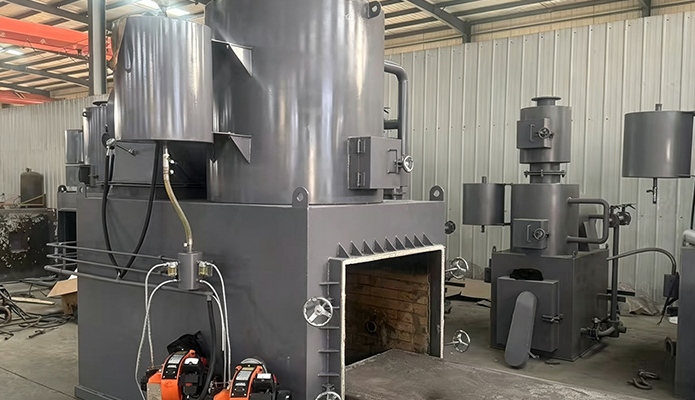
How to Choose the Right Industrial Waste Incinerator
The selection process can follow a practical sequence:
Waste Analysis → Required Capacity → Incinerator Type → Feeding Method → Combustion Conditions → Ash Handling → Emission Requirements
For example, a project handling mixed industrial waste may require a different configuration from a project treating hazardous materials. A rotary kiln design may be considered when waste characteristics require continuous movement and high-temperature treatment.
The equipment should be matched to the complete operating process.
Common Problems Caused by Improper Incinerator Selection
Incorrect equipment selection can create several operational problems.
An incinerator with insufficient capacity may cause processing delays. An unsuitable feeding arrangement can increase manual handling. Incorrect combustion conditions may lead to unstable operation or incomplete treatment.
Other problems can include excessive fuel consumption, frequent maintenance, difficult ash removal, and insufficient space for routine inspection.
These problems often originate from incomplete waste analysis or unclear project specifications before purchase.
Custom Industrial Incinerators for Different Applications
Different industrial projects have different waste characteristics and operating requirements. Custom Industrial Incinerators can be configured according to waste type, capacity, feeding method, combustion requirements, ash discharge, and installation conditions.
A supplier should understand the customer's waste characteristics before recommending equipment.
For buyers comparing an industrial incinerator for sale, technical communication is therefore as important as equipment price. Providing waste information, expected capacity, operating schedule, and installation conditions can help suppliers develop a more suitable configuration.
For an industrial waste incinerator, the correct choice depends on the complete treatment process. Waste characteristics, capacity, combustion temperature, residence time, feeding method, ash handling, and maintenance requirements should all be evaluated before purchase. Careful selection can help the equipment operate more consistently and better match the actual requirements of an industrial waste treatment project.
Online Message
RELATED PRODUCTS

LAR designs a Medical Waste Incinerator for the safe and controlled disposal of infectious and clinical waste in healthcare environments. The company develops each Medical Waste Incinerator to ensure high-temperature destruction, stable operation, and reliable emission control. A Medical Waste Incinerator is widely used in hospitals, laboratories, clinics, and pharmaceutical facilities.
LAR designs a Garbage Incinerator for efficient and controlled disposal of municipal and industrial solid waste. The company develops each Garbage Incinerator to ensure stable combustion performance, reduced emissions, and long-term operational reliability. A Garbage Incinerator is widely used in cities, industrial parks, and waste treatment facilities.
LAR designs a Domestic Waste Incinerator for efficient and controlled treatment of household solid waste in urban and rural areas. The company develops each Domestic Waste Incinerator to ensure stable combustion performance, reduced emissions, and long-term operational reliability. A Domestic Waste Incinerator is widely used in residential communities, municipal stations, and small-scale waste treatment facilities.
LAR designs the animal carcass incinerator for safe and controlled disposal of dead animals in agricultural, veterinary, and municipal environments. The company develops the animal carcass incinerator to handle biohazardous animal remains generated from farms, slaughterhouses, animal shelters, and disease control centers. The animal carcass incinerator helps reduce infection risks and prevents environmental contamination through high-temperature thermal treatment.
LAR designs the livestock incinerator for safe and controlled disposal of animal waste generated in farms, veterinary facilities, and animal management centers. The company develops the livestock incinerator to handle different types of livestock carcasses and pet remains under strict biosecurity requirements. The livestock incinerator helps reduce disease transmission risks and ensures hygienic waste elimination through high-temperature combustion.
LAR designs the pet cremation incinerator for safe and hygienic disposal of companion animal remains in veterinary clinics, pet cremation centers, and animal care facilities. The company develops the pet cremation incinerator to provide controlled high-temperature combustion that ensures complete thermal decomposition of organic materials. The pet cremation incinerator helps reduce odor, infection risk, and environmental impact during pet waste treatment.
LAR designs the animals waste incinerator for safe and controlled disposal of animal-related waste generated in veterinary clinics, farms, shelters, and research facilities. The company develops the animals waste incinerator to process biological residues such as animal carcasses, tissue waste, and contaminated materials under high-temperature conditions. The animals waste incinerator helps reduce infection risks and improves biosecurity in animal waste management.
LAR develops the rotary kiln incinerator for continuous high-temperature treatment of hazardous and industrial waste streams. The company designs the rotary kiln incinerator to handle complex waste types such as sludge, chemical residues, solid waste, and contaminated materials. The rotary kiln incinerator uses a rotating cylindrical structure to ensure full mixing and complete combustion of waste.
LAR designs the pyrolysis incinerator for advanced thermal treatment of solid waste with low-oxygen decomposition technology. The company develops the pyrolysis incinerator to process municipal waste, industrial waste, and hazardous materials through controlled thermal breakdown. The pyrolysis incinerator converts complex waste into combustible gas, oil-like fractions, and solid residue under high-temperature conditions.
LAR designs the small incinerator for compact and controlled waste treatment in clinics, laboratories, small farms, and community facilities. The company develops the small incinerator to handle low-volume waste streams such as animal waste, medical waste, and general combustible residues. The small incinerator provides safe on-site disposal with stable high-temperature combustion.
