
 English
 Русский
 Español
 Français
 Deutsch
 简体中文
 Árabe
 Português
 日本語
 한국어
 हिंदी
 Prancis
 Türkçe
 Tiếng Việt
 Italiano
 ไทย

Refractory Mixer vs. Industrial Mixer for Refractory: How to Choose the Right Equipment
Mixing is an important step in refractory material production. The correct raw material ratio does not always guarantee a consistent final mix. Particle size, binder distribution, moisture content, loading sequence, and mixing time can all affect the result.
For this reason, choosing the right refractory mixer requires more than comparing machine capacity or purchase price. The equipment should match the material, production volume, and mixing process.
Why Refractory Materials Need Suitable Mixing Equipment
Refractory materials often contain several raw materials with different particle sizes and densities. Some formulations also contain binders, additives, or a controlled amount of water.
If the mixing process is not suitable, dry powder may remain unevenly distributed or moisture may concentrate in certain areas. The final material can then show differences from one batch to another.
These problems may later appear during installation or service.
A suitable refractory mixing equipment solution should provide enough mixing action to distribute the different components without unnecessarily extending the production cycle.
What Is a Refractory Mixer?
A refractory mixer is designed for mixing refractory materials such as castables and other dry or wet refractory formulations.
The main objective is to achieve a consistent mixture throughout each batch.
In practical production, operators normally need to control several factors:
Raw material loading sequence
Mixing time
Water or binder addition
Batch size
Discharge process
The mixer is only one part of the process, but its design can strongly affect how easily these factors are controlled.
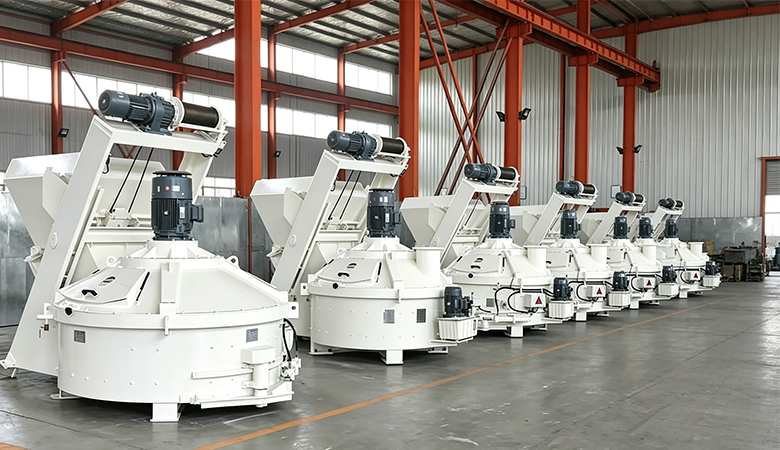
What Is an Industrial Mixer for Refractory?
An industrial mixer for refractory is generally selected when production requirements are larger or when the customer needs equipment integrated into a broader production process.
The key difference is not simply machine size.
A large mixer may provide higher output, but it still needs to provide suitable mixing performance for the specific refractory formulation.
Production scale, batch frequency, material characteristics, and plant layout should therefore be considered together.
Refractory Mixer vs. Industrial Mixer for Refractory
| Factor | Refractory Mixer | Industrial Mixer for Refractory |
|---|---|---|
| Main focus | Refractory material mixing | Larger-scale production |
| Batch size | Small to medium | Medium to large |
| Application | Flexible refractory production | Industrial production |
| Process control | Material-focused | Production-focused |
| Output | Depends on configuration | Usually designed for higher output |
| Best selection basis | Material and batch requirements | Production and process requirements |
These are general differences. Actual performance depends on the mixer design and configuration.
A Practical Case: When Mixing Problems Affect Production
In one refractory production application, the customer noticed differences between batches even though the raw material formula had not changed.
The first assumption was that the raw materials were inconsistent.
A review of the production process showed another issue. The loading sequence and mixing time were not consistent between batches. Some batches also received water at different stages.
The production team adjusted the loading procedure and mixing process and reviewed the equipment settings.
The result was more consistent material preparation.
The case showed an important point: mixing quality depends on both the equipment and the way the equipment is operated.
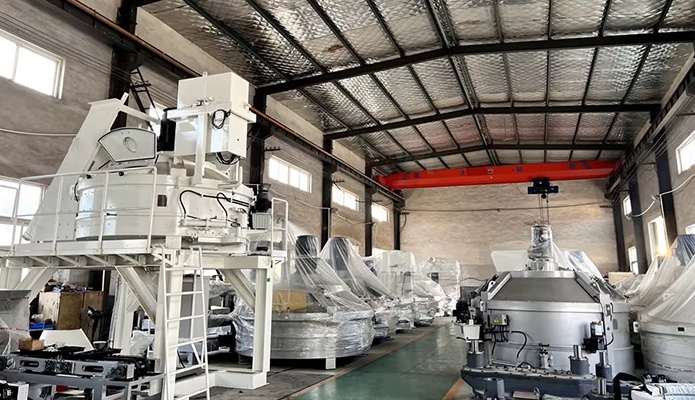
How Mixing Quality Affects Refractory Performance
Poor mixing can cause uneven distribution of fine particles, binders, or moisture.
This may affect workability during installation and create differences between batches.
The relationship is straightforward:
Poor Mixing → Uneven Material Distribution → Inconsistent Installation → Unstable Performance
A good mixer cannot compensate for incorrect raw material proportions, but it can provide a more controlled environment for the mixing stage.
How to Choose the Right Refractory Mixing Equipment
Before selecting equipment, buyers should provide basic production information.
| Item | Why It Matters |
|---|---|
| Material type | Determines mixing requirements |
| Particle size | Affects mixing behavior |
| Batch size | Determines suitable capacity |
| Moisture content | Affects mixing conditions |
| Required output | Influences production configuration |
| Mixing time | Helps evaluate efficiency |
| Cleaning requirements | Affects equipment design |
| Plant layout | Determines installation requirements |
This information allows suppliers to recommend equipment based on the actual process rather than simply offering a standard model.
What Should Buyers Ask Suppliers?
When comparing refractory mixing equipment suppliers, buyers should ask how the mixer performs with their specific materials.
Important questions include:
What refractory materials can the mixer handle?
What is the recommended batch capacity?
How is mixing uniformity achieved?
How long does a typical batch require?
How easy is the equipment to clean?
Can the configuration be adjusted for different formulations?
What maintenance is required?
A supplier with experience in refractory production can also help identify potential problems before equipment installation.
The choice between a refractory mixer and an industrial mixer for refractory should be based on the complete production process.
Material characteristics, batch size, output requirements, mixing time, moisture control, and plant conditions all affect equipment selection.
The right refractory mixing equipment can help improve batch consistency, reduce unnecessary mixing time, and support more stable refractory production.
The practical lesson is simple: choose the mixer according to the material and production process, not only according to machine size or purchase price.
Online Message
RELATED PRODUCTS

LAR designs pan mixers for refractory and castable site operation. The company develops pan mixers to ensure fast, uniform, and stable mixing performance in industrial construction environments. Pan mixers are widely used in refractory installation, kiln lining, and high-temperature material preparation.
LAR designs planetary mixers for high-uniformity mixing of concrete, refractory materials, ceramics, and glass raw materials. The company develops planetary mixers to achieve fast and consistent blending in short mixing cycles. Planetary mixers are widely used in industrial batching plants and high-performance material production lines.
LAR designs pan refractory mixers for high-performance mixing of concrete and refractory materials in industrial production. The company develops pan refractory mixers to achieve fast, uniform, and stable mixing results. Pan refractory mixers are widely used in glass, ceramics, refractory, and construction material industries.
LAR designs paddle mixers for heavy-duty industrial mixing applications in refractory, chemical, and construction material industries. The company develops paddle mixers to ensure fast mixing speed, stable performance, and reliable operation under high load conditions. Paddle mixers are widely used in refractory material preparation and industrial dry-mix production lines.
LAR designs continuous refractory mixers for high-efficiency mixing and grinding of refractory powders and industrial materials. The company develops continuous refractory mixers to achieve stable, uniform, and energy-saving continuous production. Continuous refractory mixers are widely used in construction materials, ceramics, foundry, chemical, and refractory industries.
LAR designs refractory mixer machines for high-performance mixing of refractory materials in industrial production environments. The company develops refractory mixer machines to ensure stable operation, long service life, and consistent mixing quality. Refractory mixer machines are widely used in refractory plants, metallurgy, ceramics, and construction material industries.
LAR designs refractory castable mixers for high-performance mixing of castable and refractory mortar materials in industrial applications. The company develops refractory castable mixers to ensure uniform mixing, stable operation, and low energy consumption. Refractory castable mixers are widely used in refractory lining, furnace construction, and heavy industrial material preparation.
LAR designs a refractory material mixer machine for efficient blending of refractory powders, aggregates, and binding materials in industrial applications. The company develops a refractory material mixer machine to ensure stable mixing quality, uniform material distribution, and reliable operation in harsh production environments. Refractory material mixer machines are widely used in metallurgy, kiln lining, ceramics, and construction material industries.
LAR designs intensive mixers for high-speed and high-uniformity material blending in industrial production. The company develops intensive mixers to achieve fast dispersion, stable operation, and consistent material quality. Intensive mixers are widely used in refractory, ceramic, and advanced industrial material processing.
