
 English
 Русский
 Español
 Français
 Deutsch
 简体中文
 Árabe
 Português
 日本語
 한국어
 हिंदी
 Prancis
 Türkçe
 Tiếng Việt
 Italiano
 ไทย

How Vertical Incinerators Handle Different Rubbish Waste Applications
Waste can be difficult to handle when it contains mixed materials, moisture, or organic matter. For many sites, burning can reduce the amount of waste that needs further handling.
A rubbish incinerator is designed to burn waste at high temperature. The design of the unit depends on the waste type, daily waste volume, moisture level, and required operating conditions.
A vertical incinerator uses a vertical chamber for the burning process. This design can be useful for some small and medium waste treatment jobs where floor space and feeding needs must be considered.
Why Incinerators Are Used for Rubbish Waste
Rubbish can contain paper, textiles, packaging, food waste, and other combustible materials. Some waste also contains a large amount of moisture.
When waste is burned, the combustible part is converted into hot gases and ash. This can reduce the amount of solid waste that remains after treatment.
The waste must still be handled correctly before burning. Large objects may need to be removed or reduced in size. Waste with high moisture may also need more heat to maintain stable combustion.
This is why the waste itself should be checked before choosing an incinerator.
How a Vertical Incinerator Works
A vertical incinerator has a combustion chamber arranged in a vertical layout. Waste is placed into the chamber and burned under controlled air and temperature conditions.
The basic process is simple:
Waste Feeding → Combustion → Gas Treatment → Ash Removal
The combustion chamber is lined with refractory materials. The lining protects the steel body from high heat.
Air supply also affects combustion. Too little air can lead to incomplete burning. Too much air can increase heat loss and affect temperature control.
Operators need to monitor the waste feed and combustion conditions during operation.
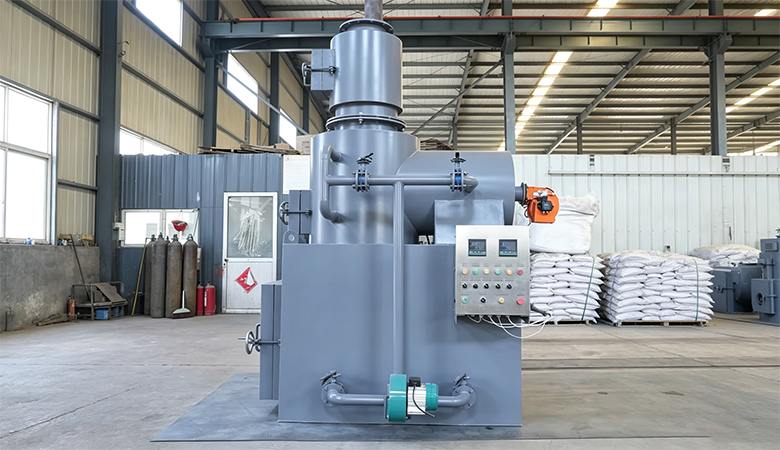
What Types of Waste Can a Vertical Incinerator Handle?
A vertical incinerator can be used for different types of combustible waste, depending on its design.
Possible applications include:
General rubbish
Organic waste
Paper and packaging waste
Textile waste
Certain industrial waste
Some animal or agricultural waste
The exact waste range depends on the equipment design and local operating rules.
Waste moisture is an important factor. Wet waste can be harder to burn because part of the available heat is used to remove water.
Waste size also matters. Very large pieces may not burn evenly. A stable feed size can help maintain more consistent combustion.
When a Vertical Incinerator Is Used for Small-Scale Waste Treatment
A vertical design can be useful when the site has limited space or does not need a very large waste treatment unit.
The vertical chamber makes use of height rather than a large floor area. This can be helpful at certain plants, farms, clinics, or small industrial sites.
However, available space is only one part of the decision.
Operators should also check daily waste volume, waste type, moisture, feeding method, ash handling, and maintenance access.
A small unit can become difficult to operate if the waste volume is higher than its practical capacity.
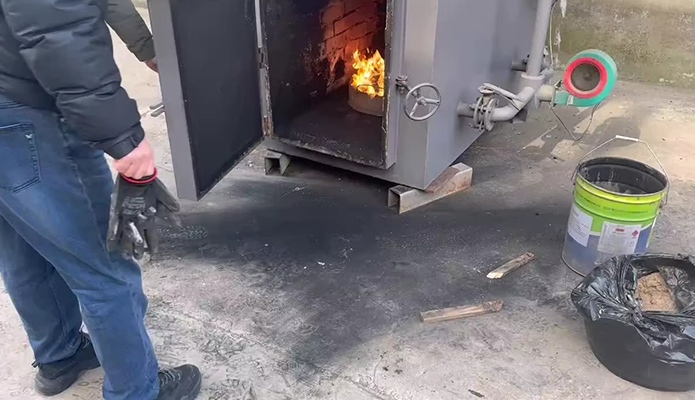
What to Check When Looking for an Incinerator for Sale
When looking for an incinerator for sale, buyers should first define the actual waste conditions.
Important information includes:
Item | Why It Matters |
Waste type | Affects combustion behavior |
Daily waste volume | Helps define unit capacity |
Moisture level | Affects heat demand |
Waste size | Affects feeding and burning |
Feeding method | Affects daily operation |
Ash volume | Affects ash removal |
Available space | Affects equipment layout |
Refractory lining | Protects the chamber from heat |
The purchase price should not be the only point of comparison.
Maintenance access is also important. Operators need to inspect the refractory lining, remove ash, and check the combustion area during regular service.
A simple design can be easier to maintain when the equipment matches the actual waste.
Common Problems Caused by Poor Incinerator Operation
Many operating problems are linked to waste conditions or poor operation.
High moisture can make it difficult to keep a stable combustion temperature. Too much waste at one time can also reduce air flow inside the chamber.
Another common problem is ash build-up. If ash is not removed regularly, it can reduce useful chamber space and affect air movement.
Refractory damage can also occur after long use. Cracks or worn areas should be checked during maintenance.
Operators should also avoid changing the feed rate too quickly. A steady feed can make temperature control easier.
A vertical incinerator is not suitable for every waste application. The equipment should match the waste type, waste volume, moisture, feeding method, and site conditions.
For buyers searching for an incinerator for sale, these factors are more useful than comparing equipment size alone. A suitable rubbish incinerator should be practical to operate, inspect, clean, and maintain.
The main lesson is simple: start with the waste, then match the incinerator to the actual working conditions.
Online Message
RELATED PRODUCTS

LAR manufactures the industrial incinerator for controlled waste treatment in industrial environments. The company designs the industrial incinerator to support high-efficiency combustion of solid and liquid waste generated from manufacturing, chemical processing, and municipal services. The industrial incinerator helps reduce waste volume and supports safer environmental management practices.
LAR designs a Plastic Waste Incinerator for safe and efficient disposal of industrial plastic waste in controlled thermal environments. The company develops each Plastic Waste Incinerator to ensure stable combustion performance, reduced emissions, and continuous operation in industrial facilities. A Plastic Waste Incinerator is widely used in manufacturing plants, recycling centers, and waste treatment stations.
LAR designs an Incinerator for Harmless to support safe and controlled disposal of non-hazardous solid waste in industrial and municipal environments. The company develops each Incinerator for Harmless to ensure stable combustion, low emission output, and long-term operational reliability. A Incinerator for Harmless is widely used in waste treatment plants, factories, and environmental protection projects.
LAR manufactures the hospital incinerator for safe and controlled treatment of medical and clinical waste. The company designs the hospital incinerator to handle infectious materials, disposable medical products, and regulated healthcare residues. The hospital incinerator helps reduce infection risks by converting biomedical waste into sterile ash through high-temperature combustion.
LAR designs a Medical Waste Incinerator for the safe and controlled disposal of infectious and clinical waste in healthcare environments. The company develops each Medical Waste Incinerator to ensure high-temperature destruction, stable operation, and reliable emission control. A Medical Waste Incinerator is widely used in hospitals, laboratories, clinics, and pharmaceutical facilities.
LAR designs a Garbage Incinerator for efficient and controlled disposal of municipal and industrial solid waste. The company develops each Garbage Incinerator to ensure stable combustion performance, reduced emissions, and long-term operational reliability. A Garbage Incinerator is widely used in cities, industrial parks, and waste treatment facilities.
LAR designs a Domestic Waste Incinerator for efficient and controlled treatment of household solid waste in urban and rural areas. The company develops each Domestic Waste Incinerator to ensure stable combustion performance, reduced emissions, and long-term operational reliability. A Domestic Waste Incinerator is widely used in residential communities, municipal stations, and small-scale waste treatment facilities.
LAR designs the animal carcass incinerator for safe and controlled disposal of dead animals in agricultural, veterinary, and municipal environments. The company develops the animal carcass incinerator to handle biohazardous animal remains generated from farms, slaughterhouses, animal shelters, and disease control centers. The animal carcass incinerator helps reduce infection risks and prevents environmental contamination through high-temperature thermal treatment.
LAR designs the livestock incinerator for safe and controlled disposal of animal waste generated in farms, veterinary facilities, and animal management centers. The company develops the livestock incinerator to handle different types of livestock carcasses and pet remains under strict biosecurity requirements. The livestock incinerator helps reduce disease transmission risks and ensures hygienic waste elimination through high-temperature combustion.
LAR designs the pet cremation incinerator for safe and hygienic disposal of companion animal remains in veterinary clinics, pet cremation centers, and animal care facilities. The company develops the pet cremation incinerator to provide controlled high-temperature combustion that ensures complete thermal decomposition of organic materials. The pet cremation incinerator helps reduce odor, infection risk, and environmental impact during pet waste treatment.
LAR designs the animals waste incinerator for safe and controlled disposal of animal-related waste generated in veterinary clinics, farms, shelters, and research facilities. The company develops the animals waste incinerator to process biological residues such as animal carcasses, tissue waste, and contaminated materials under high-temperature conditions. The animals waste incinerator helps reduce infection risks and improves biosecurity in animal waste management.
LAR develops the rotary kiln incinerator for continuous high-temperature treatment of hazardous and industrial waste streams. The company designs the rotary kiln incinerator to handle complex waste types such as sludge, chemical residues, solid waste, and contaminated materials. The rotary kiln incinerator uses a rotating cylindrical structure to ensure full mixing and complete combustion of waste.
