
 English
 Русский
 Español
 Français
 Deutsch
 简体中文
简体中文
 Árabe
Árabe
 Português
 日本語
日本語
 한국어
한국어
 हिंदी
हिंदी
 Prancis
 Türkçe
 Tiếng Việt
 Italiano
 ไทย
ไทย

How Removable Insulation Jackets Reduce Heat Loss and Maintenance Time
Industrial equipment often loses a surprising amount of heat through small components. Valves, flanges, pumps, pipe fittings, and expansion joints can remain exposed even when the main equipment has good insulation.
These areas are also among the most frequently inspected and maintained. This creates a practical problem. Fixed insulation may provide good thermal protection, but removing it during maintenance can be slow and difficult.
A properly designed Insulation Jacket provides another approach. It can remain in place during normal operation and be removed when technicians need access to the equipment.
Why Fixed Insulation Creates Maintenance Problems
Traditional insulation is often installed permanently around pipes and equipment. This arrangement works well for areas that rarely require inspection.
The situation changes when the insulated component contains a valve, flange, filter, pump, or other serviceable part.
When maintenance is required, technicians may need to cut through the insulation and remove the outer covering. After the repair, the insulation must be rebuilt or replaced.
Over time, this creates additional labor and material costs.
A maintenance manager at a processing plant described the problem clearly:
“The equipment itself was easy to service. The insulation was what took the extra time.”
This is a common reason why removable insulation becomes attractive for frequently serviced equipment.
A Practical Case: Valve Maintenance
A customer operating high-temperature process equipment had several valves that required regular inspection.
The original insulation was fixed around the valve bodies. Every maintenance operation required part of the insulation to be removed. After inspection, the damaged insulation sections were difficult to restore to their original condition.
The technical team reviewed the maintenance process and recommended a removable design.
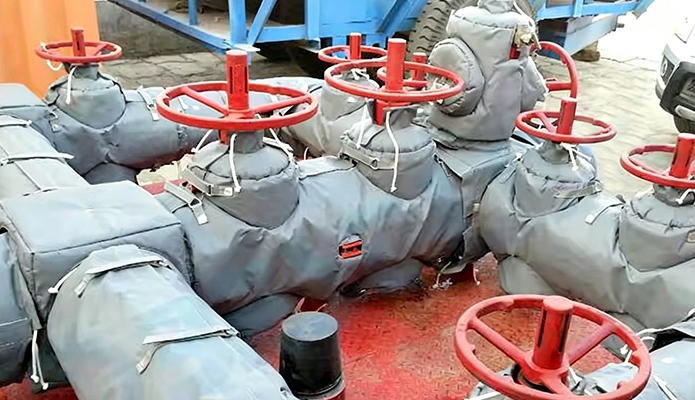
The new Removable Insulation Jackets were made to fit the valve geometry and were secured with removable fasteners.
During subsequent inspections, technicians could remove the jacket, access the valve, complete the maintenance work, and reinstall the insulation without rebuilding the complete insulation layer.
The customer reported that the biggest improvement was not simply easier installation. It was the ability to reuse the same insulation after repeated maintenance operations.
Where Removable Insulation Works Best
An Insulation Jacket is particularly useful around components that need regular access.
Typical applications include:
Valves
Flanges
Pumps
Filters
Pipe fittings
Expansion joints
Steam equipment
High-temperature process equipment
It is less necessary for large surfaces that rarely require maintenance.
The best results usually come from using removable insulation selectively rather than replacing every fixed insulation section.
How Insulation Jackets Help Reduce Heat Loss
Small exposed areas can become significant heat-loss points when they operate continuously.
A valve or flange may represent only a small part of the total equipment surface, but its operating temperature can remain high throughout production.
An Insulation Covers Jacket helps reduce direct heat transfer from these components to the surrounding environment.
However, the effectiveness of the insulation depends heavily on fitting quality.
Gaps around the component, poorly closed seams, or incorrect dimensions can reduce thermal performance.
For this reason, the jacket should be designed according to the actual component shape rather than treated as a simple fabric cover.
Why Proper Fit Matters More Than Thickness
Increasing insulation thickness does not always solve the problem.
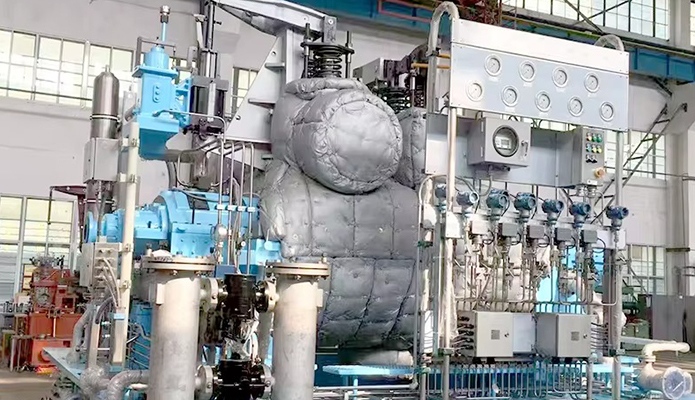
A thick jacket with poor fitting can leave gaps around corners and connection points. A thinner jacket that fits the equipment closely may provide better overall coverage.
During one project, the customer initially requested a thicker insulation layer for several valves. After reviewing the installation, the main problem was found to be poor coverage around the valve stem and connection area.
Instead of simply increasing thickness, the jacket shape was modified to improve coverage.
This provided a more practical solution without unnecessarily increasing the insulation size.
What Should Be Considered Before Ordering?
Before purchasing an Insulation Jacket, several details should be confirmed:
| Item | Why It Matters |
| Operating temperature | Determines suitable insulation materials |
| Equipment dimensions | Ensures accurate fitting |
| Component shape | Affects jacket construction |
| Maintenance frequency | Determines whether removable design is worthwhile |
| Available space | Influences thickness and fastening |
| Fastening method | Affects removal and reinstallation |
| Moisture exposure | May influence outer covering selection |
For irregular equipment, accurate dimensions are particularly important.
Reducing Long-Term Maintenance Costs
The value of Removable Insulation Jackets should not be measured only by the initial purchase price.
Long-term costs can include:
Labor for insulation removal
Replacement insulation
Maintenance downtime
Energy lost through exposed surfaces
Reinstallation work
If a valve is inspected several times a year, a reusable insulation jacket can avoid repeatedly rebuilding the insulation.
This can make the solution more economical over the equipment's operating life.
A Practical Maintenance Lesson
One important lesson from industrial projects is that insulation should not make maintenance harder than necessary.
Before selecting a permanent insulation structure, operators should identify which components require regular inspection.
For fixed surfaces, conventional insulation may be sufficient.
For frequently serviced components, removable insulation can provide better maintenance access while maintaining thermal protection during normal operation.
The goal is not to use removable insulation everywhere. The goal is to use it where accessibility and thermal protection are both important.
An Insulation Jacket can provide more than thermal insulation. For valves, flanges, pumps, and other frequently serviced components, it can make maintenance faster and reduce the need to repeatedly rebuild damaged insulation.
Removable Insulation Jackets are particularly useful when equipment requires regular inspection or repair. Proper dimensions, fitting, fastening, and insulation selection are essential for reliable performance.
An Insulation Covers Jacket should therefore be designed around the actual equipment rather than treated as a standard cover.
The practical lesson is simple: good industrial insulation should not only reduce heat loss; it should also work with the maintenance process.
Online Message
RELATED PRODUCTS

LAR designs the flange insulation jacket for thermal protection in pipelines and industrial flange connections. The company develops this product to reduce heat loss and improve energy efficiency in hot fluid systems. The flange insulation jacket also helps protect workers from high surface temperatures in operating plants.
LAR provides thermal insulation solutions for industrial valve systems through engineered jacket products. The company designs the globe valve insulation jacket to support stable heat control in linear flow regulation valves. The globe valve insulation jacket helps reduce thermal loss around valve bodies that operate under continuous high-temperature conditions. The globe valve insulation jacket also improves operator safety by lowering external surface temperature.
LAR manufactures the valve insulation jacket for thermal control in industrial pipeline valve systems. The company designs the valve insulation jacket to reduce heat loss and improve energy efficiency in steam, oil, and chemical transport lines. The valve insulation jacket also helps maintain safer surface temperatures around operating valve equipment.
LAR produces the butterfly valve insulation jacket for thermal control in rotary valve systems used in industrial pipelines. The company designs the butterfly valve insulation jacket to reduce heat loss and improve energy efficiency in steam, oil, and chemical transport lines. The butterfly valve insulation jacket also helps lower external surface temperature and improves operational safety in valve stations.
LAR manufactures the plug valve insulation jacket for thermal management in industrial plug valve systems. The company designs the plug valve insulation jacket to reduce heat loss and improve energy efficiency in pipelines that transport steam, oil, and chemical media. The plug valve insulation jacket also helps stabilize external surface temperature and improves operator safety in high-temperature environments.
LAR produces the pipe insulation jacket for thermal protection in industrial piping systems. The company designs the pipe insulation jacket to reduce heat loss and improve energy efficiency in steam, oil, and chemical transport lines. The pipe insulation jacket also helps stabilize surface temperature and improves safety for operators working near hot pipelines.
LAR produces the pump insulation jacket for thermal protection of industrial pumping systems. The company designs the pump insulation jacket to reduce heat loss and improve energy efficiency in process plants that operate under high or low temperature conditions. The pump insulation jacket also helps stabilize pump surface temperature and improves operator safety in working environments.
LAR produces the heated insulation jacket for industrial systems that require active temperature control. The company designs the heated insulation jacket to maintain stable heat levels on equipment that operates in low-temperature or heat-sensitive environments. The heated insulation jacket helps reduce heat loss and improves process stability in pipelines, tanks, and machinery.
LAR produces custom removable insulation jackets for industrial equipment that requires flexible and repeatable thermal protection. The company designs custom removable insulation jackets to improve energy efficiency and reduce heat loss in pipelines, valves, pumps, and process equipment. The custom removable insulation jackets also help improve safety by lowering surface temperature in high-heat environments.
LAR manufactures boiler insulation jackets for thermal protection in industrial boiler systems. The company designs boiler insulation jackets to reduce heat loss and improve energy efficiency in steam generation equipment. The boiler insulation jackets also help improve operational safety by lowering external surface temperature on boiler housings and connected piping.
