
 English
 Русский
 Español
 Français
 Deutsch
 简体中文
 Árabe
 Português
 日本語
 한국어
 हिंदी
 Prancis
 Türkçe
 Tiếng Việt
 Italiano
 ไทย

How Pipe Insulation Jackets Help Reduce Heat Loss
Industrial piping often operates at temperatures far above the surrounding environment. Even when long pipe sections are insulated, flanges, elbows, valves, and other irregular areas can still become sources of heat loss.
A Pipe Insulation Jacket provides removable thermal protection for pipe sections and other areas where fixed insulation may be difficult to install or maintain. A properly designed Pipe Insulation Cover can improve coverage around complex shapes while allowing easier access for inspection and maintenance.
The main challenge is not simply selecting a thicker insulation layer. Pipe diameter, operating temperature, installation space, moisture exposure, and maintenance requirements can all affect the final result.
Why Pipe Insulation Jackets Are Used on Industrial Pipes
Industrial pipes can lose heat through their outer surfaces when there is a significant temperature difference between the pipe and the surrounding air. Exposed sections may also create high surface temperatures around working areas.
Traditional fixed insulation works well on long, straight pipe sections. However, some areas require frequent inspection or removal. These may include pipe connections, elbows, expansion joints, flanged sections, and locations near process equipment.
A Pipe Insulation Jacket can be removed and reinstalled when access is required. This makes it useful in applications where maintenance teams need to inspect the pipe without destroying or replacing the insulation after each service task.
In practice, the design should follow the actual pipe layout. A jacket that fits tightly around the insulation area can help reduce exposed gaps that may contribute to unnecessary heat loss.
How a Pipe Insulation Cover Helps Reduce Heat Loss
A Pipe Insulation Cover creates an insulating layer around the outer surface of a pipe or pipe component. The purpose is to reduce the transfer of heat from the hot surface to the surrounding environment.
However, insulation performance is affected by more than material thickness.
Gaps around closures, poorly fitted edges, compressed insulation, and exposed metal areas can reduce the effectiveness of the installation. These problems are often found around irregular pipe sections.
A practical approach is to measure the actual outside diameter, insulation space, nearby components, and access requirements before production.
For example, a jacket designed only from the nominal pipe size may not fit correctly if the pipe already has existing insulation or additional external components.
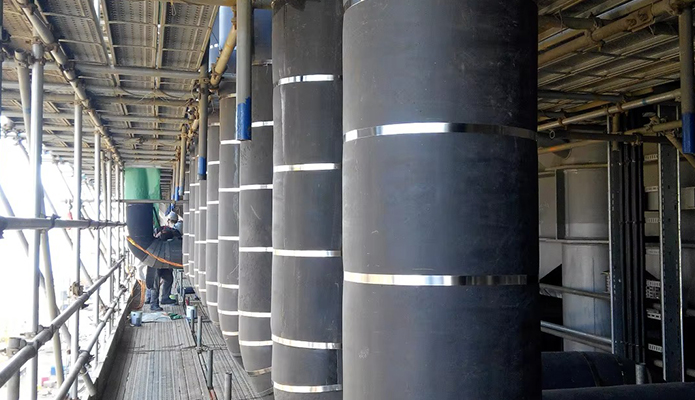
Insulated Pipe Wrap for Complex Pipe Configurations
An Insulated Pipe Wrap can be useful when a rigid or permanently fixed insulation structure is difficult to install.
Complex pipe configurations may include:
Elbows and bends
Large-diameter pipes
Flanged connections
Limited installation space
Pipes located close to other equipment
Sections requiring frequent access
The wrap or jacket should follow the actual geometry of the installation area.
In one common maintenance situation, a pipe section may be opened regularly for inspection. A fixed insulation layer can require cutting and removing the material each time. After maintenance, new insulation may need to be installed.
A removable Insulated Pipe Wrap can reduce this repeated work when it is designed for the specific installation area.
The fastening method also matters. The closure should allow the jacket to remain secure during operation while still allowing technicians to remove it when access is needed.
When to Choose a Custom Pipe Insulation Jacket
Standard insulation sizes may not fit every application.
A Custom Pipe Insulation Jacket can be considered when pipe dimensions, surrounding equipment, or maintenance requirements make a standard design difficult to use.
Custom designs can take into account:
Pipe outside diameter
Insulation thickness
Operating temperature
Pipe length
Elbows and connections
Nearby valves or flanges
Available installation space
Required opening positions
Maintenance frequency
The goal is not only to cover the pipe. The jacket should also allow practical installation and removal.
For example, if the insulation section includes a flange that must be inspected regularly, the jacket may need a separate opening or removable section. Designing this feature before production can help avoid cutting or modifying the jacket later.
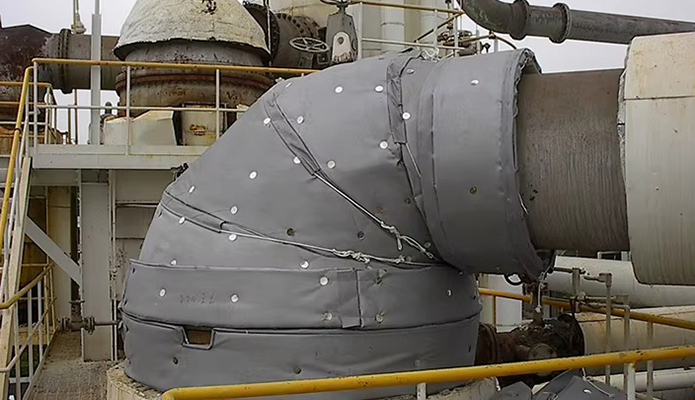
Key Factors for Selecting Pipe Insulation Covers
Before selecting Pipe Insulation Covers, it is useful to review the actual operating conditions.
| Factor | Why It Matters |
| Operating temperature | Affects insulation material selection |
| Pipe diameter | Determines jacket dimensions |
| Pipe geometry | Affects pattern and construction |
| Insulation thickness | Influences thermal protection |
| Installation space | Affects jacket design |
| Outdoor exposure | May require weather-resistant protection |
| Maintenance frequency | Determines the need for removable construction |
| Fastening method | Affects installation and reinstallation |
A common mistake is to focus only on temperature. Two pipes operating at the same temperature may require different insulation designs if one is a straight, inaccessible pipe and the other requires regular inspection.
The operating environment and maintenance process should therefore be considered together.
How Removable Pipe Insulation Jackets Simplify Maintenance
Maintenance access is one of the main reasons for using removable insulation.
When technicians need to inspect, repair, or replace a pipe component, fixed insulation may need to be removed and discarded. This can increase labor requirements and create additional material waste.
A removable Pipe Insulation Jacket can be opened, removed, and installed again after maintenance when the jacket remains in good condition.
This does not mean every pipe requires a removable design. Long, straight sections with little maintenance access may be better suited to other insulation methods.
The decision should be based on how the pipe is used and maintained.
For industrial facilities, the best insulation design often starts with a detailed review of the installation area. A Pipe Insulation Jacket can provide flexible thermal protection where maintenance access is important. A properly fitted Pipe Insulation Cover can improve coverage around exposed or irregular sections, while an Insulated Pipe Wrap can offer a practical solution for complex configurations.
The key lesson is simple: effective pipe insulation depends on both thermal requirements and practical access. By considering dimensions, temperature, pipe geometry, and maintenance needs before installation, operators can choose an insulation solution that fits the actual working conditions.
Online Message
RELATED PRODUCTS

LAR designs the flange insulation jacket for thermal protection in pipelines and industrial flange connections. The company develops this product to reduce heat loss and improve energy efficiency in hot fluid systems. The flange insulation jacket also helps protect workers from high surface temperatures in operating plants.
LAR provides thermal insulation solutions for industrial valve systems through engineered jacket products. The company designs the globe valve insulation jacket to support stable heat control in linear flow regulation valves. The globe valve insulation jacket helps reduce thermal loss around valve bodies that operate under continuous high-temperature conditions. The globe valve insulation jacket also improves operator safety by lowering external surface temperature.
LAR manufactures the valve insulation jacket for thermal control in industrial pipeline valve systems. The company designs the valve insulation jacket to reduce heat loss and improve energy efficiency in steam, oil, and chemical transport lines. The valve insulation jacket also helps maintain safer surface temperatures around operating valve equipment.
LAR produces the butterfly valve insulation jacket for thermal control in rotary valve systems used in industrial pipelines. The company designs the butterfly valve insulation jacket to reduce heat loss and improve energy efficiency in steam, oil, and chemical transport lines. The butterfly valve insulation jacket also helps lower external surface temperature and improves operational safety in valve stations.
LAR manufactures the plug valve insulation jacket for thermal management in industrial plug valve systems. The company designs the plug valve insulation jacket to reduce heat loss and improve energy efficiency in pipelines that transport steam, oil, and chemical media. The plug valve insulation jacket also helps stabilize external surface temperature and improves operator safety in high-temperature environments.
LAR produces the pipe insulation jacket for thermal protection in industrial piping systems. The company designs the pipe insulation jacket to reduce heat loss and improve energy efficiency in steam, oil, and chemical transport lines. The pipe insulation jacket also helps stabilize surface temperature and improves safety for operators working near hot pipelines.
LAR produces the pump insulation jacket for thermal protection of industrial pumping systems. The company designs the pump insulation jacket to reduce heat loss and improve energy efficiency in process plants that operate under high or low temperature conditions. The pump insulation jacket also helps stabilize pump surface temperature and improves operator safety in working environments.
LAR produces the heated insulation jacket for industrial systems that require active temperature control. The company designs the heated insulation jacket to maintain stable heat levels on equipment that operates in low-temperature or heat-sensitive environments. The heated insulation jacket helps reduce heat loss and improves process stability in pipelines, tanks, and machinery.
LAR produces custom removable insulation jackets for industrial equipment that requires flexible and repeatable thermal protection. The company designs custom removable insulation jackets to improve energy efficiency and reduce heat loss in pipelines, valves, pumps, and process equipment. The custom removable insulation jackets also help improve safety by lowering surface temperature in high-heat environments.
LAR manufactures boiler insulation jackets for thermal protection in industrial boiler systems. The company designs boiler insulation jackets to reduce heat loss and improve energy efficiency in steam generation equipment. The boiler insulation jackets also help improve operational safety by lowering external surface temperature on boiler housings and connected piping.
